Complete Day Hike Packing List for Every Season
Updated: April 2026
Whether it's your first day hike or your five hundredth, forgetting a key item can turn a great outing into a miserable one — or worse, a dangerous one. This guide covers the complete day hike packing list organized by season, so you'll always be prepared.
The Ten Essentials (Every Hike, Every Season)
Originally developed by The Mountaineers in the 1930s and updated for modern gear, the Ten Essentials system covers the basics for any outdoor emergency:
- Navigation: Map, compass, and/or GPS device. Even on well-marked trails.
- Sun protection: Sunglasses, sunscreen (SPF 30+), and a hat with a brim.
- Insulation: Extra layers beyond what you think you need — weather changes fast.
- Illumination: Headlamp with fresh batteries. Always.
- First-aid supplies: A compact kit with blister treatment, bandages, and pain relievers.
 Adventure Medical Kits Ultralight
 - Fire: Waterproof matches or a lighter in a waterproof container.
- Repair tools and knife: Multi-tool or knife, duct tape (wrap some around your water bottle).
- Nutrition: Extra food beyond what you plan to eat — a full extra meal's worth.
- Hydration: Extra water plus a way to treat water.
 CamelBak Chute Mag Bottle +
  Sawyer MINI Filter
 - Emergency shelter: Emergency bivy or space blanket — weighs ounces, could save your life.
Core Day Hike Gear
The Right Pack
A 15-25 liter daypack handles most day hikes. Look for ventilated back panel, hip belt for load transfer, and hydration compatibility. The 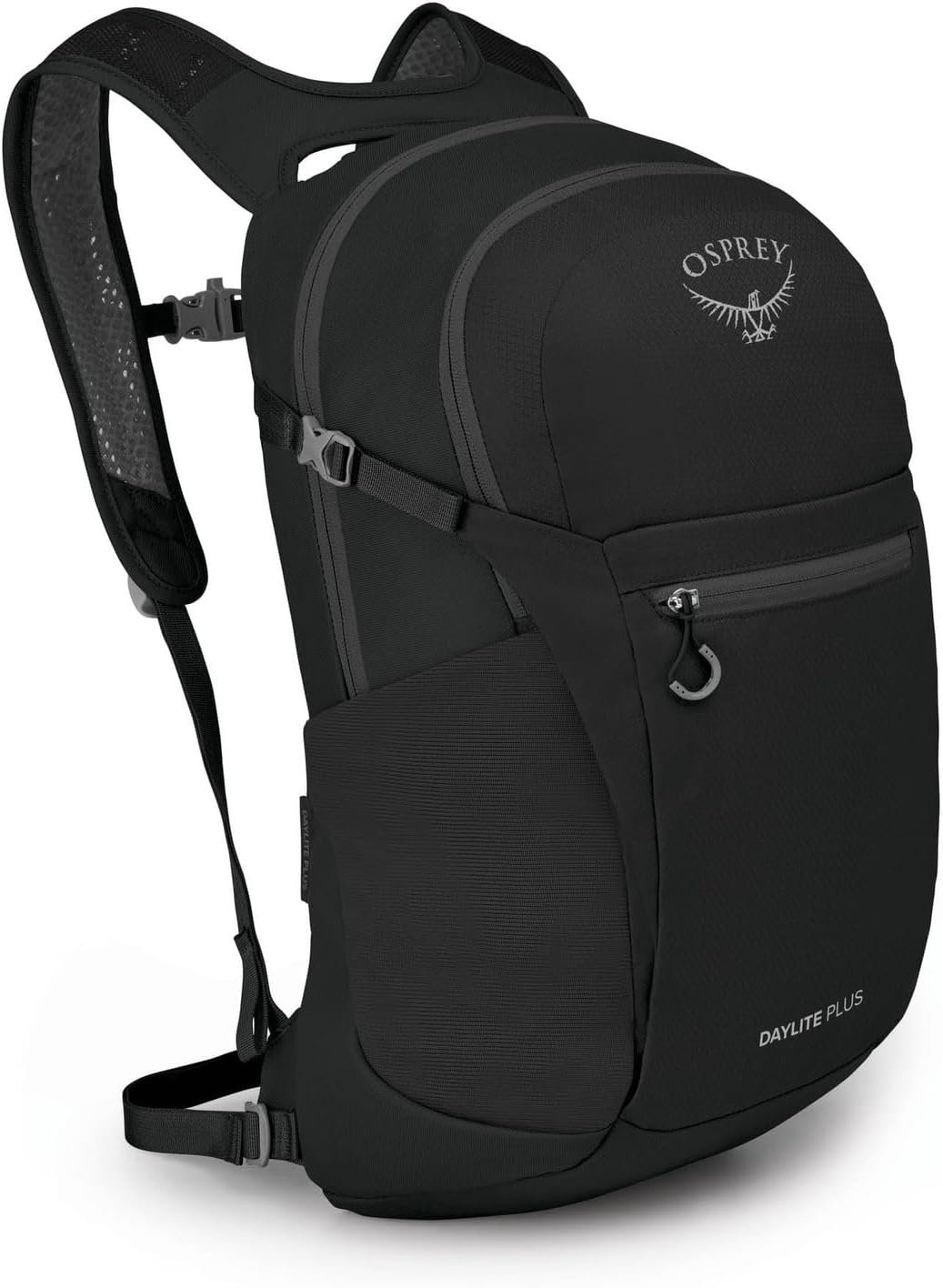 Osprey Daylite Plus (20L) hits the sweet spot for most hikers.
Footwear
Match your footwear to terrain and pack weight. Trail runners for light loads on maintained trails, hiking shoes for moderate loads and rocky terrain, boots for heavy loads or ankle support needs. The  Merrell Moab 3 is the classic all-around day hiking shoe.
Hydration System
Carry at least 0.5 liters per hour of hiking, more in heat. A wide-mouth insulated bottle like the CamelBak Chute Mag is versatile and leak-proof.
Season-Specific Additions
Spring (March–May)
- Packable rain jacket — spring showers are unpredictable.
 Columbia Watertight II
 - Gaiters for muddy trails and snow patches at elevation
- Tick protection: permethrin-treated clothing + DEET for exposed skin
- Trekking poles for stream crossings on swollen creeks.
 Black Diamond Trail Ergo Cork
 - Extra socks — your feet WILL get wet
Summer (June–August)
- Electrolyte tablets or powder — water alone isn't enough in the heat
- Lightweight sun hoodie or UPF-rated long sleeve
- Cooling towel for rest stops
- Extra water capacity (consider 3L reservoir for hot trails)
- Bug head net for areas with heavy mosquito activity
Fall (September–November)
- Warm layer (fleece or lightweight puffy jacket)
- Beanie and lightweight gloves — mornings start cold
- Headlamp with extra batteries — days get shorter fast
- Bright colors during hunting season
- Microspikes if hiking above treeline (early ice)
Winter (December–February)
- Full insulation system: base layer, mid layer, shell
- Insulated waterproof boots with warm socks
- Hand and toe warmers
- Thermos with hot drink
- Snowshoes or microspikes depending on conditions
- Emergency bivy (non-negotiable in winter)
What NOT to Bring
Overpacking is the beginner's biggest mistake. Skip these unless you specifically need them:
- Cotton clothing (absorbs moisture, causes hypothermia)
- Jeans (heavy, restrictive, dangerous when wet)
- Full-size DSLR camera unless you're specifically doing photography
- Multiple pairs of shoes
- More than one book